How Bonus Frameworks Promote Exploration Across Slots and Table Games Online
Written by Xander Roth · Jul 30, 2026
How Bonus Frameworks Promote Exploration Across Slots and Table Games Online
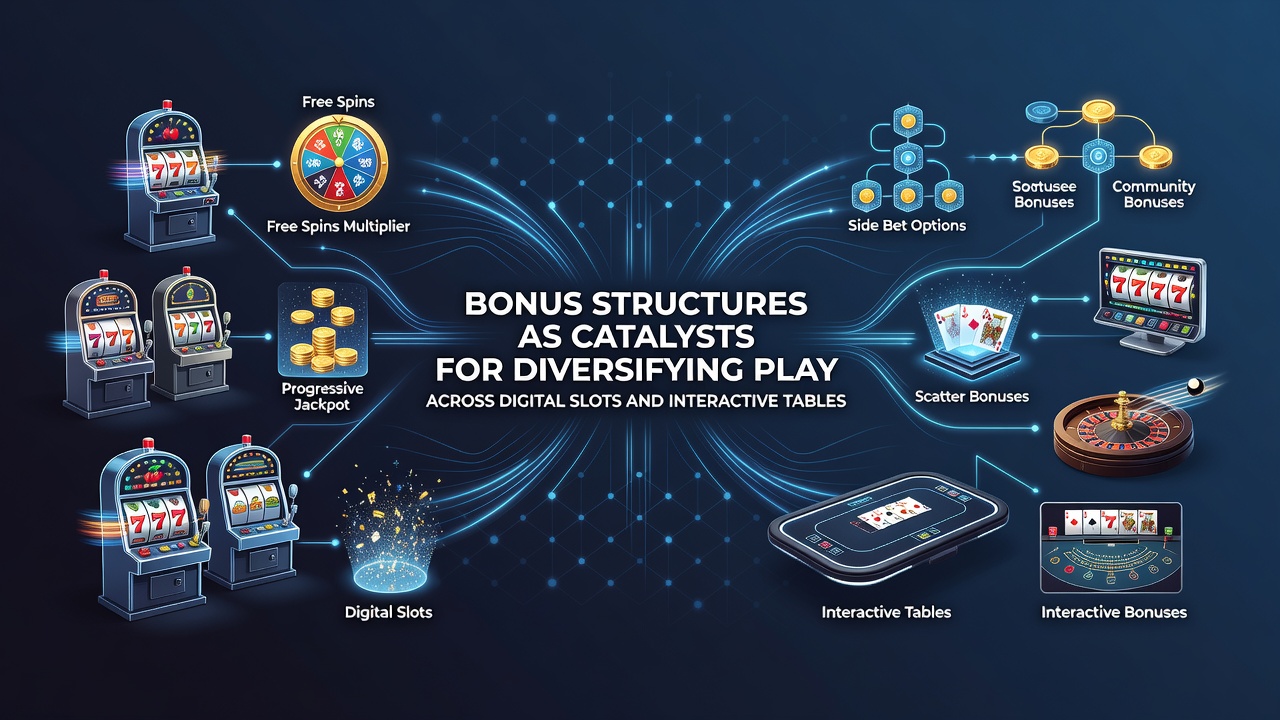
Bonus structures in digital gaming environments operate through layered incentives that adjust player behavior toward multiple game categories, and these mechanisms often tie wagering contributions differently across slots versus interactive tables. Data from industry analyses show that welcome packages and reload offers frequently assign full contribution rates to slot spins while applying reduced percentages to table games such as blackjack or roulette, which in turn nudges participants to sample both formats within a single session cycle.
Mechanics Behind Contribution Rates and Game Variety
Operators design bonus terms where slots typically count 100 percent toward playthrough requirements, whereas live dealer tables and classic table variants range between 10 and 20 percent, creating a built-in pathway that moves activity from one genre to another as users progress through the required volume. Research compiled by the American Gaming Association indicates that platforms applying these differentiated rates record higher session diversity, with participants logging time in both digital reels and interactive tables during the same login period. And the pattern holds because players chase completion of the wagering threshold by balancing high-contribution slots with lower-contribution tables that still deliver engagement and potential returns.
Free spin allocations tied to initial deposits further extend this effect, since the spins land on specific slot titles yet the resulting winnings carry over into table play once the bonus converts to cashable funds. Observers note that cashback programs, which return a percentage of net losses across all verticals, encourage continued movement between slots and tables because the rebate calculation remains uniform regardless of game type.
Impact on Player Session Patterns in Mid-2026
Figures released in July 2026 by several North American operators revealed that accounts receiving tiered loyalty bonuses demonstrated a 27 percent increase in cross-genre play compared with accounts limited to slot-only promotions. Those who've tracked these metrics point to progressive loyalty ladders where points earned on slots unlock table-specific multipliers, effectively bridging the two formats without forcing an abrupt switch. This structure maintains momentum because the player already holds an active balance and receives prompts that highlight eligible table games at the moment the multiplier activates.
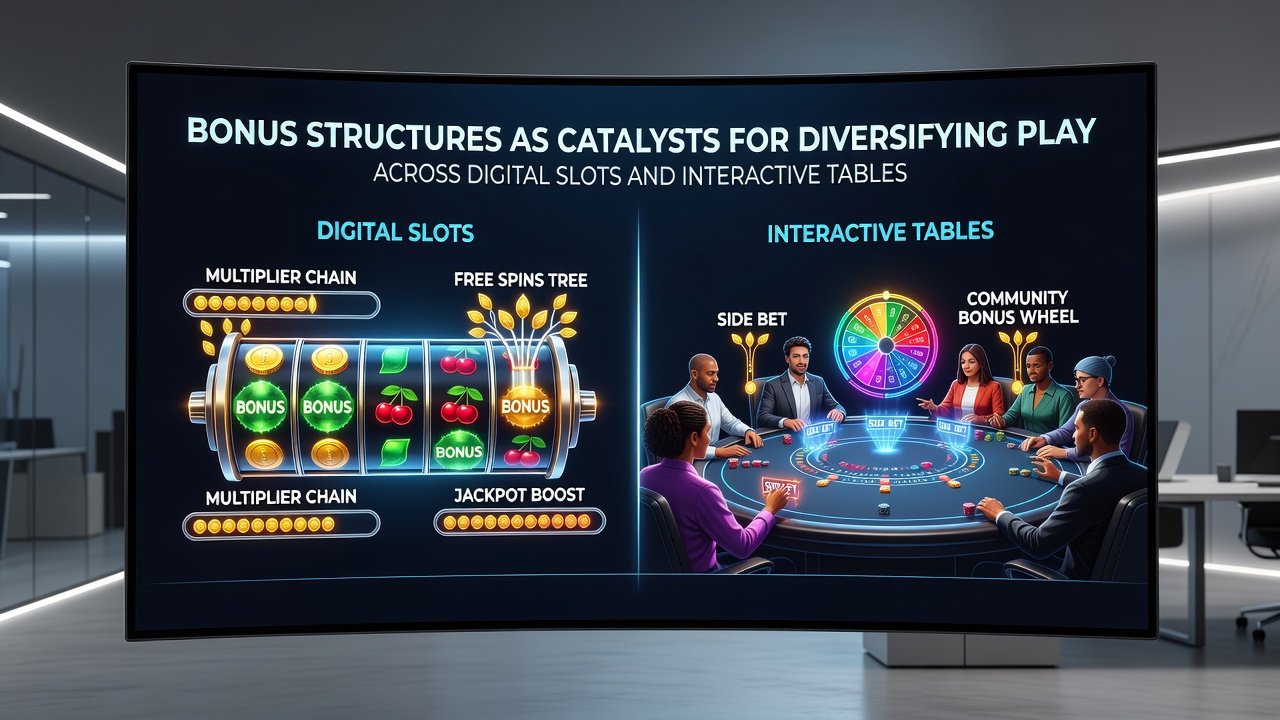
Interactive tables benefit when bonus layers include live dealer cashback or dedicated table tournaments funded by slot-derived entry fees, and such integrations appear in multiple regulated markets outside the United Kingdom. Canadian provincial data, for instance, shows similar contribution weighting patterns that correlate with elevated table game participation among bonus recipients.
Regional Regulatory Approaches to Bonus Design
Regulatory frameworks in various jurisdictions shape how these incentives can steer play. The Nevada Gaming Control Board maintains oversight on promotional structures offered by licensed sites, requiring clear disclosure of contribution percentages so players understand why certain games advance wagering requirements faster. Similar transparency rules appear in Australian state guidelines, where operators must publish the exact weighting applied to each game category within any bonus offer.
Academic reviews from the University of Nevada, Las Vegas gaming research center have examined datasets spanning multiple years and found that transparent contribution tables reduce player confusion while still achieving the diversification effect operators seek. The studies further document that when table games carry lower weighting, users extend overall session length rather than abandoning the bonus midway, because the perceived path to completion remains achievable through mixed play.
Case Examples of Diversification Through Layered Incentives
One documented campaign from a multi-state operator combined 50 free spins on a popular slot title with a subsequent 100 percent match bonus valid on live tables, and tracking data indicated that 62 percent of recipients who completed the spins moved directly into table sessions to satisfy the remaining playthrough. Another program in a European market outside the UK used weekly cashback calculated across both slots and tables, resulting in measurable upticks in roulette and blackjack volume among users who previously focused exclusively on reels. These examples illustrate how the same bonus pool can function as a bridge rather than a silo when contribution rules and payout triggers are calibrated accordingly.
Conclusion
Bonus frameworks achieve diversification across digital slots and interactive tables by aligning contribution percentages, loyalty multipliers, and cross-genre promotions that reward mixed activity within defined wagering cycles. Reports from sources such as the American Gaming Association and the University of Nevada, Las Vegas continue to track these patterns, supplying operators with evidence that structured incentives sustain broader game engagement without altering core payout mechanics. As platforms refine these models, the data underscore consistent movement between formats when the bonus architecture itself distributes value across both verticals.